Shopping Cart (empty)
Total: £0.00
Culinary and Medical Bees Winter Reserves Plants For Early Pollen The June Gap Dearth
Slideshow image 1
Slideshow image 2
Slideshow image 4
Slideshow image 3
Featured Products

Welcome to Bee Happy Plants

Why are ‘Wild Species’ Plants Best for Bees?

Wild (or horticultural term: ‘species’) plants are un-altered by man. All flowering plants have evolved over millions of years with their pollinators – in mutual-dependency on each other (pollen and nectar in return for pollination which produces fruit and seed).
Wild plants have the ability through a healthy gene-pool, of evolving to adapt to changing environmental conditions, it being the mechanism by which all species on earth have so far survived.
Loss of original wild species
(from which we have bred and flooded the market with artificial hybrid-clones which do not produce viable seed therefore no vital genetic material needed by their wild origin) ultimately means loss of their pollinators. Pollinators and wild flowering plants are totally interdependent (bees are the primary pollinators, but also butterflies, moths, midges, dragonflies and some wasps)Continued extinction of wild plants (by destroying their habitats and planting only hybrid-clones in our gardens), will cause continued extinction of pollinators. The UNEP have warned(in their Global Bee Colony Disorders and other Threats to Insect Pollinators report) “Meanwhile an estimated 20,000 flowering plant species, upon which many bee species depend for food, could be lost over the coming decades unless conservation efforts are stepped up.


BREAKING NEWS:

Bee-harming pesticides (neonicotinoids) are banned in Europe: Europe will enforce the world's first continent-wide ban on widely used insecticides alleged to cause serious harm to bees, after a European commission vote on Monday.

The suspension is a landmark victory for millions of environmental campaigners, backed by the European Food Safety Authority (EFSA), concerned about a dramatic decline in the bee population. The vote also represents a serious setback for the chemical producers who make billions each year from the products and also UK ministers, who voted against the ban. http://www.guardian.co.uk/environment/2013/apr/29/bee-harming-pesticides-banned-europe 

May and June are ideal months to plant perennials, shrubs and trees which have been in pots, into prepared ground. This is also time to sow many vegetables, such as runner beans, squashes, kale, courgettes and swede


Sow a Seed

If you can see a way, sow a seed;
 To help our species evolve from greed.

The seed must be bright, pure and strong;
Free from disease of human wrong.

And from this seed a beauty will grow;
Of love, for a bee, worm, bat or crow.

Let it bloom and spread like a humble weed;
Enlightened thought, to smother our greed.

A poem by Bee Abrightstar, 2011
 

An organic propagation nursery situated at the foothills of the Blackdown Hills on the Somerset-Devon border, certified to Soil Association organic standards (number G8492). All the plants we raise are acceptable to bees - we aim to provide their favourites - and specialise in wild, especially medicinal, plants which have not been altered (such as modern hybrids) by artificial breeding . We also raise some fruit and vegetables cultivars - but only ones which are 'Open-Pollinated' (meaning in the field they are pollinated naturally). 


All Bee Happy Plants' seeds are open pollinated; to learn more about the benefits of open pollination click here.

All our plants are raised from seed (except fruit cultivars), so each and every seed-grown plant will be genetically unique, to help ensure a healthy gene-pool of all the species we propagate. This will help many plants acclimatise to climate change, even if the climate change shift is relatively fast, as scientists now predictWithout plants like these, all bees, honey bees, bumblebees and solitary bees (of which there are about 250 species in the UK alone) would have no food, as they eat only pollen and nectar. 

Also as many of our plants are medicinal, we need to preserve their phytochemical purity, by leaving their genetic blueprint well alone. Unless there is very good reason otherwise, we like to keep our wild plants WILD! Nature is a wise plant breeder and we don't wish to alter plants that have evolved with pollinators and other insects over so many millions of years... they have stood the test of time (the mother of all tests of time). 

Happy planting for bees, plants and all their other pollinators.

Happy Plants Make Happy Bees!

With profits from the sale of all our plants, we are currently creating a 'bee sanctuary', on 14 acres in Devon and using of course 100% organic principles with a permaculture theme. All the plants will be honeybee and bumblebee favourites. This is a not-for-profit activity.

Bee Happy Plants also supports the following charities:

  • The Soil Association
  • British Beekeeper's Association 


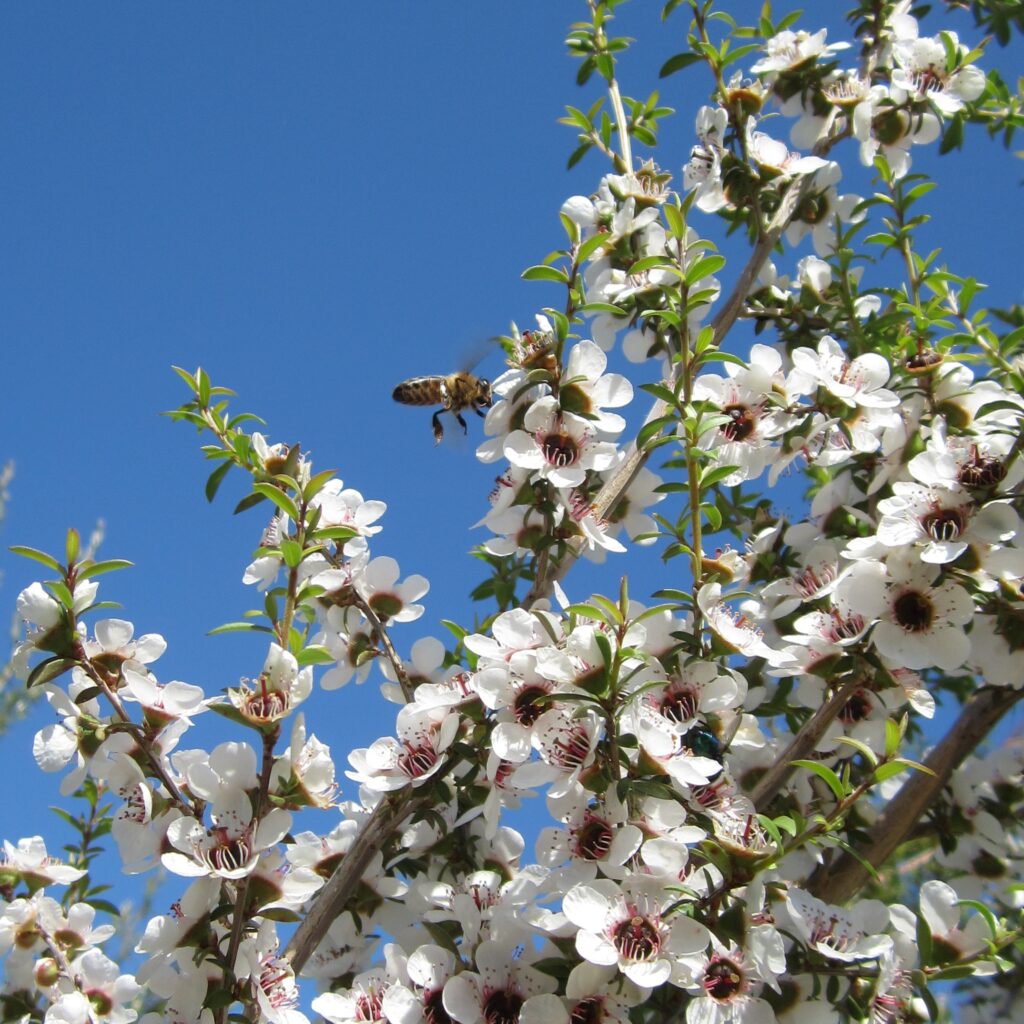
Leptospermum scoparium (Wild, New Zealand, Alpine Manuka)

An absolutely star bee plant fresh from the pristine New Zealand wilderness. We think we are unique in being able to offer you this amazing plant, with extremely important beneficial and protective effects on the bees. Discovered by English honey bees which were introduced into New Zealand in approximately 1831...   Manuka Flowers